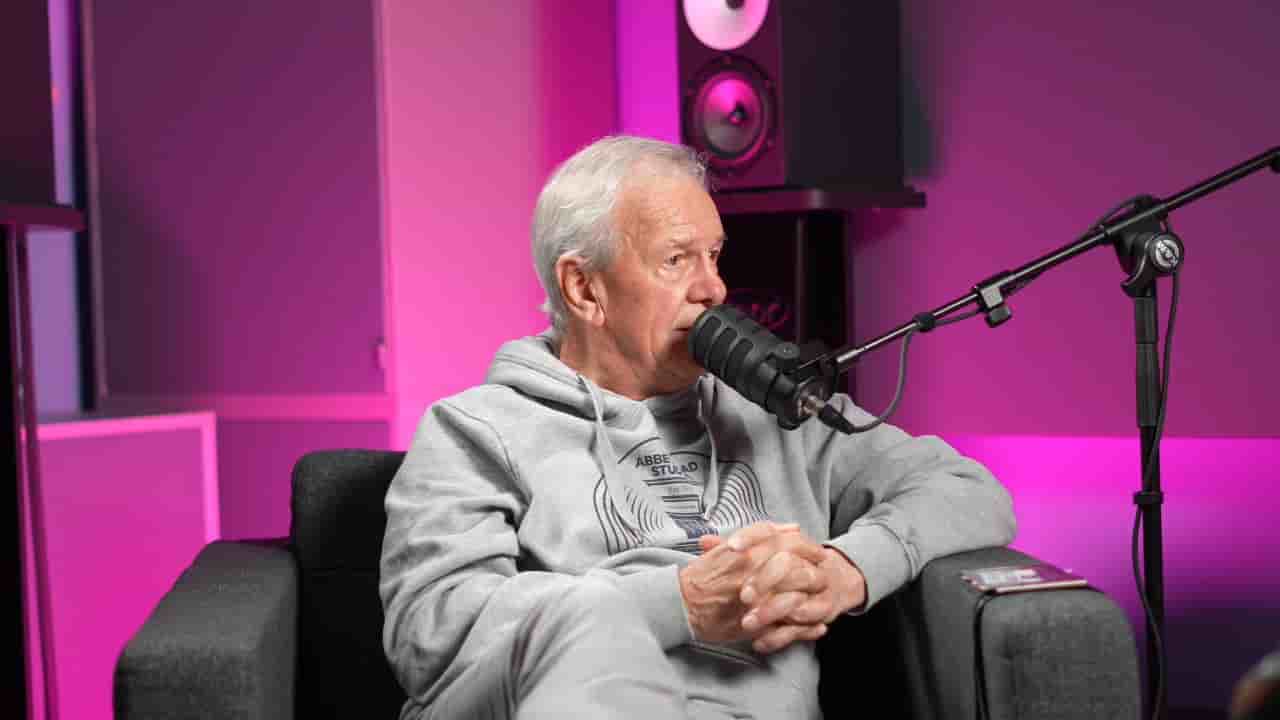
Fritz Segner and Alex Gernand, with 90 combined years in music, trace their careers back to AFN radio, a billiard table accident, Giorgio Moroder's studio, and seeing the Beatles live at Circus Krone.
Ninety combined years in the music business tends to produce a certain kind of memory: not fuzzy nostalgia, but sharp, dated, ticket-stub-precise recall. Fritz Segner knows his first concert was October 6, 1980. Kiss headlining, Iron Maiden opening, Karlsruhe, a Bravo tour. His mother drove him from Mannheim. He was fourteen, and he still has the ticket. Alex Gernand's first show is harder to pin down only because his options are more extraordinary: the Beatles or the Rolling Stones, both at Munich's Circus Krone, both on Bravo tours in 1965 and 1966. He was there for both, and he was already a discerning enough listener to find the covers slightly lacking.
I knew "Long Tall Sally" from Little Richard. And honestly, I preferred that version to John Lennon's.
That detail captures something essential about both men. They came to the music industry not as wide-eyed fans who would accept anything from their heroes, but as people who already knew the source material, who had been training their ears on American radio before most of their peers had heard of the bands that would define a generation.
Alex Gernand grew up in Lampertheim, a town of 35,000 near Mannheim, where the social options were the ice cream parlor or the football pitch. What saved him was AFN, the American Forces Network, the radio station broadcasting to U.S. military personnel stationed in Germany. He listened to it religiously, every day, and it was AFN that gave him his ear for the originals behind the British Invasion covers. When the Beatles played "It's Now or Never" and "Long Tall Sally," Alex heard the debt.
Fritz Segner's path into the industry ran through AFN too, but in a more literal way. In 1974, he heard a DJ on the station announce they needed a studio technician. He was studying electrical engineering at the time, already doing studio work on the side. His plan was simple and slightly devious: show up, pretend to want the job, get a look at the studios, meet the people he heard every day on the radio.
I thought: go there, act like you want the job, and at least you'll see the studios and meet the people you hear every day.
What happened instead was that he arrived at Karlbachstrasse 15 in Schwabing, immediately got conscripted into helping carry a billiard table through a doorway, and crushed his finger in the process. The secretary who patched him up asked what he was doing there. He told her about the technician position. They said they were looking for an American. He said he spoke good English. They gave him the job.
Before AFN, there was Musicland. Fritz had worked on the studio's construction as a student, literally nailing acoustic panels to the walls in the basement of the Arabella Park complex in Munich. The studio was founded by Giorgio Moroder in 1972, and Moroder himself would come by daily, bringing Fritz milk because the steel wool dust from the acoustic insulation work was going straight into his lungs.
One afternoon, Fritz was working and listening to AFN's Top 40 show when "Son of My Father," Moroder's track, came on. He told Giorgio it was charting in America. Moroder didn't believe him, went to check, came back confirmed, and told Fritz to order whatever he wanted for lunch, his treat.
I went straight to the most expensive restaurant and had my first flambéed steak. With a nice wine.
Giorgio, Fritz notes with affection, was not exactly famous for generosity. He winced at the bill but paid it.
Both men share a quality that shaped everything that followed: they heard songs as comparisons. Alex at the Stones show recognized "It's Now or Never" not as a Stones original but as a track he already knew from the Valentinos and Bobby Womack. The audience around him was in ecstasy. He was mildly impressed, maybe slightly critical.
The kids were screaming so loud the Beatles could barely hear themselves play.
That detail about Beatlemania is more than an anecdote. Ringo Starr told Alex much later that he sometimes couldn't keep proper time during those shows because he couldn't hear what the other three were playing. The PA systems of the mid-1960s simply couldn't compete with thousands of screaming teenagers. Charlie Watts had the same problem with the Stones. The most famous concerts in pop history were, for the musicians performing them, exercises in controlled chaos.
Alex eventually interviewed three of the four Beatles: George Harrison, Ringo Starr, and Paul McCartney. The story of how a kid from Lampertheim who preferred Little Richard's version ends up sitting across from the people who covered it is exactly the kind of arc that takes fifty years to complete and sounds implausible in either direction. The AFN connection, the ear trained on American radio, the willingness to show up and say yes when the opportunity appeared, all of it accumulated into access that most music journalists would consider a career's worth of achievement on its own.
Both Segner and Gernand are now documenting these decades of stories, swapping them with each other to see what surfaces. Fifty-two years for one, forty-three for the other. The memories, it turns out, are intact. The ticket stubs are filed. And the version of "Long Tall Sally" Alex prefers is still Little Richard's.